
Am I suitable for cataract surgery and if so, which type will benefit me most?
In this video, Dan Nguyen explains how to know if you’re suitable for cataract surgery and if so, which type will benefit you most
If cataracts are making your vision cloudy or blurred, you may be wondering whether cataract surgery is right for you. You may also want to know which type of surgery and which lens will best suit your eyes and lifestyle.
I’m Dan Nguyen, a Consultant Eye Surgeon. I help patients understand their cataract surgery options and decide on the next steps based on their individual needs.
You may be suitable for cataract surgery if your cataracts are affecting your daily life. The best treatment depends on your eye health, the type of cataract you have and what you want to achieve with your vision. An assessment is needed to confirm whether surgery is appropriate for you.
How do I know if I am suitable for cataract surgery?
Cataracts develop when the natural lens inside your eye becomes cloudy. This can make it harder to see clearly and may affect your confidence when carrying out everyday activities.
Common signs of cataracts include blurred or cloudy vision, difficulty seeing at night, sensitivity to bright lights, glare when driving and colours appearing less bright. You may also find that your glasses prescription changes more often than before.
If these changes are affecting your quality of life, it may be time to explore your options for cataract treatment.
You do not always need to wait until a cataract becomes severe before considering surgery. The decision usually depends on how much your vision is affected and whether the potential benefits of surgery outweigh the risks for you.
During an assessment, I can examine your eyes, assess your vision and discuss how cataracts are affecting your daily activities. This helps us understand whether cataract surgery may benefit you.
What factors affect my suitability for cataract surgery?
There is no single rule that determines whether someone is suitable for cataract surgery. Your individual circumstances matter.
Your eye health is one important factor. I need to check for other eye conditions that could affect your treatment or the results you can expect. Your general health, previous eye surgery and the type and severity of your cataract may also be relevant.
Your lifestyle and visual needs matter too. For example, you may want to see more clearly when driving, reading, working on a computer or enjoying your hobbies. Understanding these priorities helps us discuss which lens options may be appropriate.
It is also important to have realistic expectations. Cataract surgery can improve vision affected by a cloudy lens, but it cannot guarantee perfect eyesight or remove every need for glasses. Other eye conditions may also limit how much your vision improves.
The aim is to find an option that is suitable for your eyes and supports the activities that matter most to you.
What types of cataract surgery are available?
There are different surgical techniques for removing a cataract. The most suitable approach depends on your eyes and the type of cataract you have.
Phacoemulsification
Phacoemulsification is the most common method of cataract surgery. It uses ultrasound energy to break up the cloudy natural lens, which is then removed through a small incision. An artificial lens is placed inside the eye to replace it.
This technique is suitable for many people with cataracts. It is often associated with a relatively quick recovery, although healing time varies between patients.
Manual small incision cataract surgery
Manual small incision cataract surgery, often called MSICS, uses a slightly larger incision to remove the cloudy lens. It may be considered in certain cases, including some patients with very dense cataracts.
Your surgeon will assess your eyes and explain whether this technique is appropriate for you.
Laser-assisted cataract surgery
Laser-assisted cataract surgery uses a laser to help with some stages of the procedure. The cloudy lens is still removed and replaced with an artificial lens.
Whether laser assistance offers benefits for you depends on your eyes and individual circumstances. It is not automatically the best choice for every patient.
Which type of cataract surgery is best? There is no single best method for everyone. Your eye health, the type of cataract and your surgeon’s assessment all help determine the most appropriate approach.
Which lens will benefit me most after cataract surgery?
Choosing an artificial lens, also called an intraocular lens or IOL, is an important part of cataract surgery. Different lenses are designed to provide different ranges of vision.
The right option depends on your prescription, eye health, lifestyle and how much you would like to reduce your dependence on glasses.
Monofocal lenses
Monofocal lenses are designed to provide clear vision at one main distance, usually far away. They are a common option for cataract surgery.
You may still need glasses for reading, computer work or other close-up activities. For many people, however, a monofocal lens is a suitable choice for their visual needs.
Premium lenses
Premium lenses include options designed to provide a wider range of vision or correct certain refractive errors, such as astigmatism.
Multifocal lenses are designed to help you see at different distances, while extended depth of focus lenses aim to provide a broader range of vision, particularly for distance and intermediate tasks. Toric lenses can help correct astigmatism.
Some premium lenses may reduce your dependence on glasses, but they are not suitable for everyone. They can also involve trade-offs, such as glare or halos around lights with certain lens designs.
During your consultation, we can discuss the available options, their potential benefits and limitations, and which may suit your eyes and lifestyle.
Is private cataract surgery right for me?
You may be considering private cataract surgery because changes to your vision are affecting your daily life or because you want to explore treatment options without relying solely on an NHS pathway.
Private treatment gives you another route to assessment and care. Whether it is right for you depends on your needs, preferences, circumstances and the options available.
The important first step is to understand your cataracts and whether surgery is appropriate. You can then discuss the available procedures, lens choices, costs and expected recovery before deciding how to proceed.
You should never feel that you have to choose surgery before you understand what it involves. My aim is to give you clear information so you can make an informed decision.
Where can I have a cataract surgery consultation with Dan Nguyen?
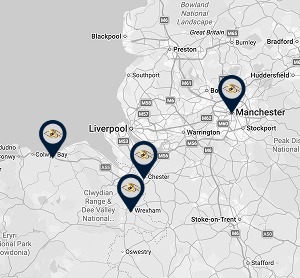
I see patients across North Wales and North West England. My current clinic locations are Wrexham, Abergele, Chester and Manchester.
In Wales, I see patients at Spire Yale Hospital in Wrexham and Spire Healthcare Abergele Clinic. In England, my clinics include The Grosvenor Hospital in Chester and Regency Eye Hospital in Manchester.
The first step is to discuss your concerns and find out what assessment or treatment may be appropriate for you. You can choose a convenient clinic location if an in-person appointment is recommended.
Take the cataract surgery suitability self-test
If you are experiencing cloudy vision or finding everyday tasks more difficult, you do not have to work out your treatment options alone.
You can start by taking our cataract and lens surgery suitability self-test. It can help you explore your options, but it does not replace a clinical assessment or confirm that you are suitable for surgery.
You can also learn more about standard cataract surgery and the treatment process before deciding on your next step.
Book a free telephone appointment to discuss your vision, ask questions and find out what may be appropriate for you.
Together, we can explore your options and work towards the best possible outcome for your eyes.

Mr Dan Nguyen
MBChB MBA FRCOphth FRANZCO Consultant Eye Surgeon
As a Consultant Eye Surgeon, I combine specialist expertise with a personalised approach to every patient. My goal is to provide clear, expert guidance and high-quality care, helping you understand your treatment options and make confident decisions about your vision.
Share This Post


Mr Dan Nguyen
Consultant Eye Surgeon
I‘m your guide to better vision. In times when long waiting lists and unclear options are the norm, it’s easy to feel stuck and worried about your eye health. Don’t let that hold you back. I’m here to show you that you can skip the endless queues and make real progress. Remember, you’re unique, not just another name on a list. Every patient I see receives top-notch care, tailored to their specific needs and lifestyle.